Workshops
For our workshops, we collaborate with educators, researchers, and experts from diverse academic institutions as well as other organizations with which we have close ties. In addition, we specifically invite other experts from the fields of research and practice. Together, they explore various economic theories and their practical applications, offering diverse perspectives on current economic policy issues.
Important: Some workshops will take place at the same time, so you won’t be able to attend all of them. The list of workshops is preliminary and will be updated continuously leading up to the academy.

Feminist Economics meets Data Feminism: Power, Measurement and Methodology
Feminist economics has long shown that economic analysis is not neutral. Rather, research questions, concepts, data, and methods are embedded in social power relations. Data feminism extends this critique by understanding data work, from collection and classification to modelling and visualisation, as a political process in its own right. In times of the increasing adaption of AI and machine learning, this perspective is particularly salient because these systems reproduce the assumptions and biases already present in the available data and modelling choices.
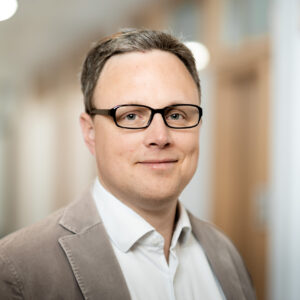
Bianka Mey is a postdoctoral researcher at Chemnitz University of Technology, Chair of Macroeconomics. She teaches courses in empirical economic research, macroeconomics, and the economics of inequality. Her research profile combines applied (micro)econometrics with a focus on issues related to volunteerism, philanthropic behavior, and gender economics, as well as work on economic inequality, energy economics, and the role of institutions as key contextual determinants of individual behavior (https://www.tu-chemnitz.de/wirtschaft/vwl4/Makrooekonomie/Mitarbeitende/Team_Mey.php.en).
© UDE/Fabian Strauch
(Post-)Growth in International Organisations
In a world facing ecological limits and social inequalities, the mainstream growth paradigm is increasingly unsustainable. A growing number of actors from academia and civil society have thus been advocating for post-growth approaches that prioritise environmental sustainability, social equity and human well-being over economic growth. Often, these growth-critical alternatives are situated at the local or, at best, national level. However, a global post-growth transition would require substantial institutional shifts beyond the national scale to change the operating logics of international institutions and global governance practices. In the first part of the workshop, which connects the fields of International Relations, ecological economics and broader sustainability studies, participants receive a concise input on the politics of (post-)growth and sustainability in international organisations (IOs) as key actors on the global scene. We also share preliminary insights from our ongoing research on (post-)growth in the SDG forums of the United Nations and in the European Environment Agency. In the second part, participants split into small groups to plan post-growth transitions in an exemplary IO (real-world or imaginary) and develop concrete policy recommendations. The workshop concludes with a plenary in which the members of each group present their results and discuss them with their peers.
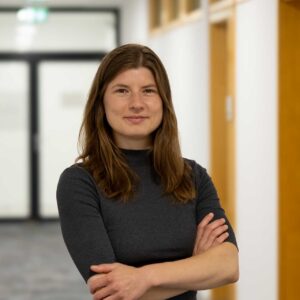
Matthias Kranke researches the political dimensions of sustainability at the global level as an assistant professor of Global Sustainability Governance at the Institute for Socioeconomics at the University of Duisburg-Essen. He leads the research group “Global Sustainability Governance,” which examines how international organizations navigate the tensions between economic growth and socio-ecological sustainability. His work specifically analyzes the extent to which ideas beyond the growth paradigm have been able to gain a foothold in key institutions of global governance.
Tabea Waltenberg is a PhD researcher in the research group ‚Global Sustainability Governance‘ at UDE. Tabea investigates the state of affairs, barriers, and enablers of post-growth in SDG forums of the United Nations. Her focus areas encompass post-growth, sufficiency, Sustainable Development Goals (SDGs) and (international) sustainability policy. She studied Economics (B.Sc.) and Economic Psychology (M.Sc.). Before starting her PhD, Tabea worked in the field of eco-social transformation and policy in various organisations.
Classifying Growth Regimes – Why Bother?
The analysis of Demand and Growth Regimes (DGR) constitutes the post-Keynesian contribution to the ongoing debate on growth models within the field of comparative political economy. It bases the examination of structural variety across capitalist economies in non-mainstream economic theory as an alternative to the Varieties of Capitalism approach grounded in supply-side economics and characterizes an economy’s DGR by reference to the dominant demand component in its national accounts and the financial balances of its sectors. What is the potential of this descriptive exercise for critical political economy?
This workshop wants to address this question from a self-critical perspective. We introduce the core framework of DGRs, explain the underlying economic theory, and want to discuss the implications of this approach for the study of current capitalist dynamics with the participants. In particular, we want to highlight the relations the approach has with critical studies about financialization, distributional conflict, and alternatives to capitalism. Participants are encouraged to read at least one of the recommended articles in advance to gain an initial overview of the DGR framework.
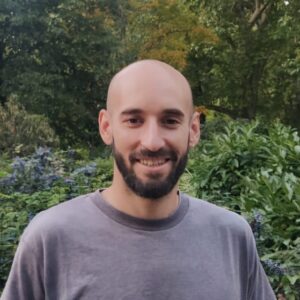
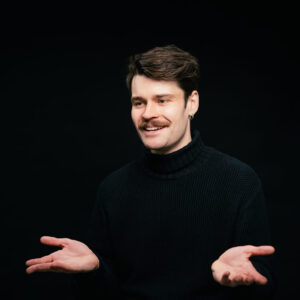
Juan Manuel Campana and Philip Blees are affiliated with the Hochschule für Wirtschaft und Recht (HWR) Berlin, where they work at the “HWR Competence Centre: Challenges and Resilience of Global Supply and Value Chains.” As doctoral candidates at the Université Sorbonne Paris Nord, their research focuses on demand and growth regimes in advanced and emerging economies, particularly in the context of economic crises and technical change. At HWR Berlin, they teach macroeconomics and ecological modelling within the heterodox study programmes “International Economics” and “Economic Policies for the Global Bifurcation (EPOG).”
What is left of Postcolonial Development?
The histories of post-colonial development states are tragic ones. Their promise of prosperity, secularism and economic sovereignty might as well belong to a different world. With the class coalitions and global economic constellation that made them possible long gone, their ruins were left for plunder by corrupt elites. Their utopian potential was then buried by a cultural critique that now knew it would always end like that.
But in a cruel twist, the specter of development has come back to haunt the world in the form of Saudi „NEOM“-Megaprojects, Emirati Datacenters and Trump’s Plan for a „Gaza-Riviera“ – nihilistic caricatures of their modernist predecessors, designed to exploit the good connections their investors enjoy with the state.
So is there really nothing left? We will trace the ideas and imaginations that shaped the post-colonial development states and discuss what they tell us for our world today, a world which in some aspects starts to look like what the global wave of economic nationalism in the 1950s was responding to. Our archeology of development will only scratch the surface. But by the end of the workshop, you will hopefully know where to look.
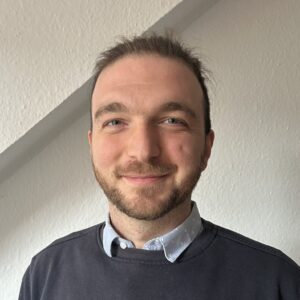
Karl Müller-Bahlke ist a PhD Researcher at the Center for Modern Indian Studies in Göttingen, specializing in public sector steel plants in the 1940s-1960s and their connection to state sovereignty, especially in India. Before this, he was chair of the SJD – Die Falken youth movement, where he was responsible for international work with a focus on peace education in the Middle East.

International Climate Finance: Between Financialization, Debt, and Solidarity
Hailed as a solution, yet repeatedly criticized in practice as being too little, too late, in the wrong place, and on poor terms. This workshop explores the aspirations and realities of international climate finance. We will examine why different political-economic perspectives take a critical view of this financing, which power dynamics are being created or reproduced in the process, and what visions exist for aligning climate finance with climate justice goals. In doing so, we will also examine a case study from my doctoral dissertation and, last but not least, discuss concrete policy recommendations.
Paula Haufe is a doctoral candidate in the Department of Political Economy, Sustainability, and Transformation at Witten/Herdecke University. Her dissertation examines whether and how public international climate finance can contribute to greater climate justice. She also serves as an advisor to the German Federal Government’s Scientific Advisory Council on Global Environmental Change (WBGU).
Student-led workshop Workshop
Economic policies are never communicated through facts and figures alone: narratives and frames shape what comes to be understood as necessary or desirable. Taking inspiration from Wittgenstein’s famous proposition that “the limits of my language mean the limits of my world”, we can ask how discourse contributes to making certain economic ideas appear as “common sense”, while others are dismissed as impossible or even unthinkable.
This workshop introduces participants to the study of economic policy through the lens of communication studies, utilising framing and critical discourse analysis. We will explore how dominant economic ideas are legitimised through persuasive narratives, and how alternative perspectives can develop effective counter-frames.
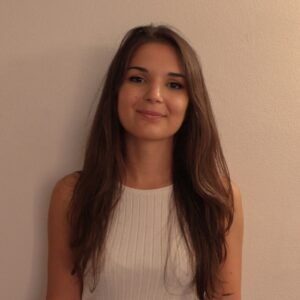
Arianna Babbi has a background in media and political communication, with a research focus on the communication of economic policy in Europe using framing analysis and critical discourse analysis. She studied literature, philosophy and communication at the University of Bologna and communication research at the Autonomous University of Barcelona. She worked in Brussels in communication roles within EU institutions and the NGO sector.
Workshops in German only
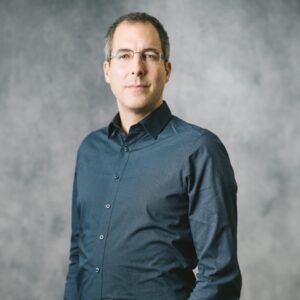
Plurale Ökonomik - eine modellbasierte Einführung
Das kanonische Lehrbuchmodell der Neoklassischen Ökonomik ist das einfache Angebot-Nachfrage-Modell, das auf der Annahme nutzenmaximierender Individuen und Gewinnmaximierungen Unternehmen basiert. Der Workshop stellt diesem paradigmatischen Modell ein synthetisches Modell sozialer Interaktion gegenüber, welches eine systematische Unterscheidung der zentralen Annahmen und wirtschaftspolitischen Implikationen mehrerer Paradigmen ermöglicht. Im Fokus stehen Neoklassische Ökonomik, Verhaltensökonomik, Evolutionär-Institutionelle Ökonomik, Keynesianische Ökonomik, Marxistische Ökonomik, Feministische Ökonomik.
Till van Treeck is Professor am Institut für Sozioökonomie (IFSO) der Universität Duisburg-Essen
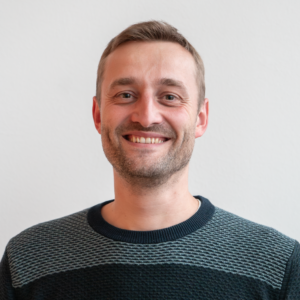
Generationengerechtigkeit, Staatsfinanzen und Schuldenbremse
Seit ihrer Einführung im Jahr 2009 gibt es politische und wissenschaftliche Kontroversen um die deutsche Schuldenbremse. Nun wurde sie im Eilverfahren reformiert und eine Kommission arbeitet an weiteren Reformvorschlägen. Das Ziel des Workshops ist es, eine Talkshow zum Thema „Schuldenbremse – endlich generationengerecht!?“ zu entwickeln und durchzuführen. Der erste Teil des Workshops wird genutzt, um den Rahmen der Talkshow abzustecken und sich inhaltlich auf das Thema vorzubereiten. Im zweiten Teil werden die Rollen entwickelt und die Talkshow durchgeführt. Abschließend wird in der Gruppe reflektiert.
Eine Person aus der Gruppe übernimmt die Moderation. Die Teilnehmenden sollen sich idealerweise in ein Pro- und ein Contra-Lager zur Reform der Schuldenbremse aufteilen, wobei jede*r einzelne auch Nuancen herausstellen kann. Als Rollen kommen beispielsweise Fachexpert*innen, Politiker*innen, Vertreter*innen von Interessenverbänden oder NGOs in Betracht. Der Kreativität sind aber keine Grenzen gesetzt.
Durch den Workshop sollen die Teilnehmenden Kompetenzen erwerben, sich in ein kontroverses und aktuelles Thema einzuarbeiten, sich ggf. auf Argumentationsmuster einzulassen, die sich nicht mit den eigenen Überzeugungen decken und in einem geschützten Raum Erfahrung in der Medienpräsenz zu sammeln.
Sebastian Gechert ist Professor für Makroökonomie an der Technischen Universität Chemnitz, wo er im Rahmen eines pluralistischen Lehrplans Makroökonomie, Klimaökonomie und die Ökonomie der Ungleichheit unterrichtet. Seine Forschungsschwerpunkte liegen auf den Wechselwirkungen zwischen makroökonomischer Politik, Verbraucherverhalten, Umwelt und Ungleichheit. Er ist regelmäßig als Berater für internationale Institutionen wie die Weltbank und die Europäische Zentralbank sowie für das Europäische Parlament und deutsche Bundes- und Landesparlamente in Fragen der Finanz- und Geldpolitik tätig. Sebastian ist Mitglied des Lenkungsausschusses des Forums für Makroökonomie und Makroökonomische Politik (FMM), das die größte jährliche wissenschaftliche Konferenz zu pluralistischen makroökonomischen Themen in Europa organisiert. Homepage: http://sebastian-gechert.com/
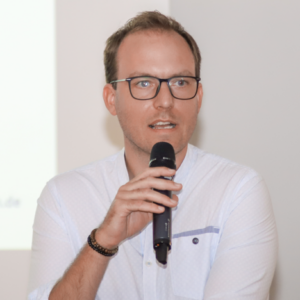
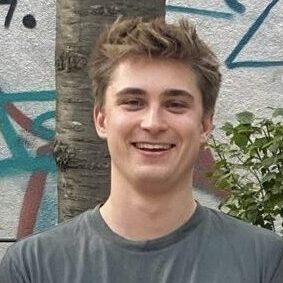
Digitaler Kapitalismus und Digitaler Kolonialismus
Digitalisierung und Künstliche Intelligenz verändern den globalen Kapitalismus fundamental. Die „Tech-Bros“ scheinen allmächtig zu werden und die Angst vor einer Machtkonzentration bei wenigen oder gar bei der KI nimmt zu. Einige, wie Yanis Varoufakis, behaupten sogar, der Kapitalismus würde durch einen „Tech-Feudalismus“ abgelöst. In diesem Workshop präsentieren und diskutieren wir, wie digitale Technologien und KI den Kapitalismus, und damit Wirtschaft und Politische Ökonomie verändern. Dies betrifft die Dynamik des Wirtschaftswachstums, Verteilung und Ungleichheiten, Arbeitsplätze und Arbeitsbedingungen, Energie- und Ressourcenverbrauch, sowie die Verteilung von Macht. Aufbauend auf diesen Analysen zeigen wir alternative Wege auf, wie eine sozial-ökologische, solidarische Zukunft in Zeiten digitaler Technologien aussehen könnte.
Vom Kapitalismus ohne Wachstum zur Postwachstumsökonomie
Die westlichen Volkswirtschaften befinden sich seit vielen Jahren in einer Phase des sehr geringen Wachstums. In Deutschland ist dies in den letzten Jahren besonders sichtbar geworden, in Form einer mehrjährigen Stagnation. Zugleich ist der Kapitalismus angewiesen auf ökonomsiches Wachstum. Mit diesem Widerspruch hängen verschiedene aktuellen Krisen zusammen, insbesondere zunehmende Vermögens- und Einkommensungleichheiten sowie der Aufstieg rechtsautoritärer und rechtsextremer Parteien. In diesem Kurs analysieren wir das Zusammenspiel aus geringem Wachstum, zunehmenden Ungleichheiten und Rechtsruck und zeigen Alternativen in Form von sozial-ökologischen, solidarischen Postwachstumsökonomien auf.
Steffen Lange beforscht die Funktionsweise zeitgenössischer Volkswirtschaften und die Bedingungen, unter denen sie nachhaltig werden können. An der Universität Siegen lehrt er im Studiengang Plurale und Transformative Ökonomik, wo er sich mit verschiedenen Wirtschaftsparadigmen und theoretischen Ansätzen zur Förderung einer nachhaltigen Transformation von Wirtschaftssystemen beschäftigt. Seine wissenschaftliche und öffentliche Arbeit befasst sich mit Themen wie Postwachstumsökonomie, Digitalisierung und Nachhaltigkeit sowie dem Zusammenspiel zwischen Wirtschaftsstrukturen und autoritären Entwicklungen.
Felix Fenner arbeitet als wissenschaftliche Hilfskraft in der Fachgruppe Plurale Ökonomik an der Universität Siegen. Gemeinsam mit Steffen Lange arbeitet er im Projekt „Digitaler Kolonialismus: Ökonomische und ökologische Implikationen der Tech-Konzerne“ an der inhaltlichen Aufarbeitung globaler Entwicklungen rund um KI und Digitalisierung sowie an deren Übersetzung in die Bildungspraxis.
Die Rolle der Unternehmen in einer Postwachstumsökonomie
Infolge des Nachhaltigkeitsdiskurses der letzten Jahrzehnte hat sich eine neue Unternehmenskultur herausgebildet: soziale Entrepreneure, grüne und gemeinwohlorientierte Unternehmen, CSX, CSR-Unternehmen usw. Diese bilden den Ausgangspunkt für Unternehmen in einer Postwachstumsökonomie (PWÖ).
Im Workshop geht es um die Fragen:
• Müssen Unternehmen in einer PWÖ gewinnorientiert wirtschaften?
• Soll der Staat ökologisch und sozial nachhaltige Unternehmen fördern?
• Wie kann der Staat günstige Rahmenbedingungen für Unternehmen in einer PWÖ schaffen?
• Welche regulatorischen Maßnahmen bräuchte es, damit Unternehmen Low-Profit Business betreiben können?
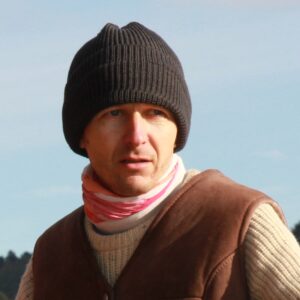
Christian Fahrbach (MSc) ist freiberuflicher Wissenschaftspublizist und war von 2018 bis 2025 Dozent an der Leuphana Universität Lüneburg zu den Themen Low-Profit und Sustainable Finance. Er publiziert in wissenschaftlichen Fachzeitschriften und auf Online-Portalen und betreibt einen eigenen Blog zum Thema Low-Profit.
Whose Monetary Architecture?
Im ersten Teil, dem Grundlagenkurs, widmen wir uns Geld als substanzgewordener Sozialfunktion und erkunden in einem Geldspiel, wie Geld als Koordinations- und Herrschaftsmittel wirkt. Anschließend rücken wir das reale Geldsystem in den Fokus: Welche Geldarten existieren? Wer schöpft welches Geld? Wer entscheidet darüber? Welche Wirkungen entstehen?
Im zweiten Teil wagen wir das Experiment eines Zukunftslabors „Utopian CBDC“. Dabei wird digitales Zentralbankgeld als Ausgangspunkt genommen, um die eigenen Annahmen über Geld zu hinterfragen und einen experimentellen Raum für alternative Architekturen zu öffnen.
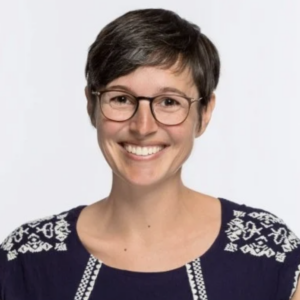
Elsa Egerer ist wissenschaftliche Mitarbeiterin an der Hochschule für Gesellschaftsgestaltung und engagiert sich für Plurale Ökonomik, nachhaltige Finanzmärkte und kritische finanzielle Bildung.
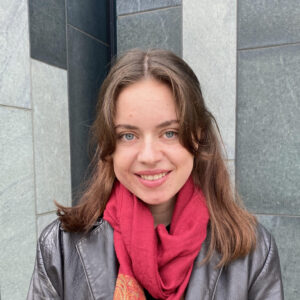
Lisbeth Scholz ist nach einem Studium der Soziologie und Politikwissenschaft in Leipzig derzeit Studentin an der Hochschule für Gesellschaftsgestaltung (HfGG) in Koblenz. Sie schließt dieses Jahr ihren Master-Studiengang „Ökonomie – Verantwortung – Institutionsgestaltung“ ab und hat sich im Rahmen ihres Studiums mit Imagination und Futures Literacy beschäftigt. In der Gestaltung und Durchführung von For Future Labs erkundet sie gemeinsam mit Teilnehmenden das transformative Potenzial von Zukünftebildung.
Hurra, die Welt geht unter – Welche Auswirkungen hat die Prämisse eines unvermeidbaren Kollapses auf das Politik- und Ökonomieverständnis?
Konträr zu den Umwelt- und Klimabewegungen der letzten Jahrzehnte, die die Abwendung von Katastrophen zum Ziel hatten, basiert der sogenannte postapocalyptic environmentalism auf der Prämisse, dass die Katastrophe(n) unvermeidlich oder schon gestartet ist. Im deutschsprachigen Raum bildet diese Prämisse zwar bisher einen Nischendiskurs, die Entstehung von Kollapscafes, Kollapscamps und erste Veröffentlichungen zeigen jedoch das wachsende Interesse an dem Thema. Der Workshop fokussiert sich auf die Auswirkungen der Prämisse eines unvermeidbaren Kollapses auf das Politik- und Ökonomieverständnis. Gemeinsam wollen wir analysieren welche politischen und ökonomischen Logiken entstehen. Anschließend soll es einen wertschätzenden Rahmen geben, um zu diskutieren welche Chancen, aber auch Probleme für eine sozial-ökologische Transformation entstehen können.
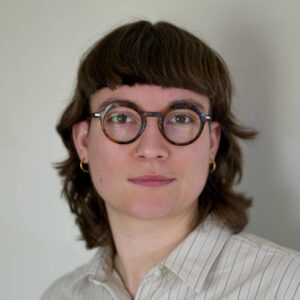
Hannah Pfister ist wissenschaftliche Hilfskraft in der Abteilung Plurale Ökonomik an der Europa-Universität Flensburg. Nach den Studien in Textilingenieurwesen sowie Angewandter Nachhaltigkeit und der Lohnarbeit im Nachhaltigkeitsmanagement ist sie als Studentin der Transformationsstudien auf der Suche nach weiteren Puzzlestücken, wie eine sozial-ökologische Transformation gelingen könnte. Ihre Forschungsinteressen sind Soziale Bewegungen, Strukturwandel, Theorien Sozialen Wandels sowie feministische Theorien.
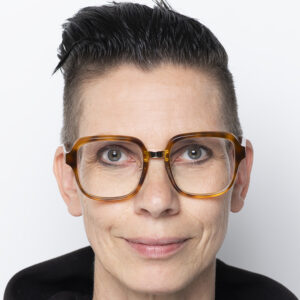
Plural utopisieren - Kollektives Imaginieren für ein anderes Wirtschaften
Eine Woche ökonomisch plural diskutieren: Und dann? Was bringt es uns, in Alternativen zu denken? Wie trainieren wir unsere Imaginationsfähigkeit, um – gemeinsam – gute, für alle ernsthaft wünschenswerte Zukunftsvorstellungen zu entwickeln, zu verhandeln und immer weiter zu entwickeln? Wir starten den Workshop mit einer kurzen Einführung ins utopische Denken sowie kritisch-utopische, thrutopische und antidystopische spekulative Erzählen. Anschließend begeben wir uns ins kollektive Imaginieren: Wir entwerfen gemeinsam Geschichten und Bilder wünschenswerter Zukünfte, um in der dystopischen Gegenwart trotzdem – und gerade! – unsere Handlungslust und Handlungsfähigkeit zu stärken. Wir üben uns dafür in verschiedenen Formaten und Methoden des kollektiven Imaginierens und (Thr)Utopisierens. Und wir enden – in guter handlungsorientierter Backcasting-Manier (zeitlich wieder „rückwärts“ gehend) – mit der Ausgangsfrage: Und dann? Der interaktive Workshop geht 2×90 Minuten; die beiden Workshop-Teile bauen aufeinander auf. Vorkenntnisse sind nicht erforderlich – nur Lust am kreativen, gemeinsamen Zukünfteentwerfen.
janas gebauer arbeitet seit bald 30 Jahren in der transdisziplinären Nachhaltigkeits- und Transformationsforschung, davon zehn Jahre am Berliner Institut für ökologische Wirtschaftsforschung (IÖW) und ebenso lange selbstständig und in diversen Kollektiven. Janas forscht, schreibt, moderiert und spricht zu öko-solidarischen Zukünften jenseits des Wachstums – und verbindet dabei den Blick auf Postwachstumskonzepte von vielfältigen Wirtschaftsakteuren mit gesellschaftlichen Debatten um Transformationen und Utopien sowie mit kollektivem Erzählen und Spekulieren. Homepage: www.kaloikostopia.org
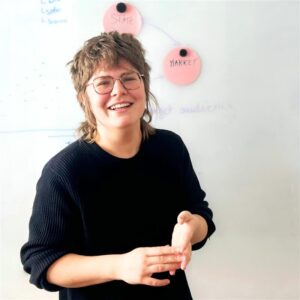
Vom Thema zum Take - Wie geht progressiver Wirtschaftsjournalismus?
Progressiver Wirtschaftsjournalismus soll Mythen entlarven, neue Perspektiven einbringen und dann und wann zur großen Kritik ausholen. Aber was ist überhaupt ein geeignetes Thema? Welche Annahmen sollte ich nicht übernehmen? Und wie schreibe ich einen Text, der gerne gelesen wird?
Im Workshop sprechen wir über das Handwerk des Journalismus und machen eine kleine Übung. Interessant für alle, die sich für Medien, Schreiben, oder *den Diskurs* interessieren.
Caro Rübe ist Redakteur*in beim Surplus Magazin und forscht beim Global Public Policy Institute zu Energie und Reichtum.
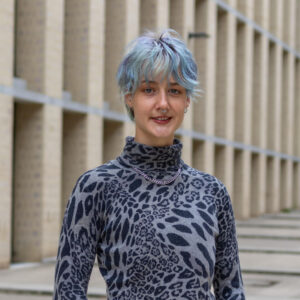
Sprechen vor der Handy-Kamera
Angeblich ist Ökomonie und Ökonomik trocken und zu komplex für 30 Sekunden-Videos. Aber: Wer junge Menschen erreichen will, muss auf Social Media stattfinden. Wer nicht untergehen will, muss hervorstechen. Das üben wir.
Du erzählst deine Geschichten: Warum lohnt es sich im 21. Jahrhundert nicht mehr VWL zu studieren – oder gerade doch? Wie geht es dir im Hörsaal unter Neoklassikern? Was hast du auf der PLUSA gelernt? Warum bist du beim Netzwerk?
Wir fangen mit einem kleinen Input an und probieren dann einfach aus. Nachher kannst du entscheiden, ob dein Video auf dem Netzwerkaccount gepostet werden darf.
Ante Leutloff macht Öffentlichkeitsarbeit fürs Netzwerk Plurale Ökonomik, ist immer wieder aufgeregt vor der Kamera und chronisch online. Dey macht deren Master an der Hochschule für Gesellschaftsgestaltung (HfGG) in Koblenz.
Our Cooperation Partners
PLUSA 2026 will be made possible by
mit freundlicher Zuwendung von
Fritz Kola etc.
PLUSA 2026 is a project by